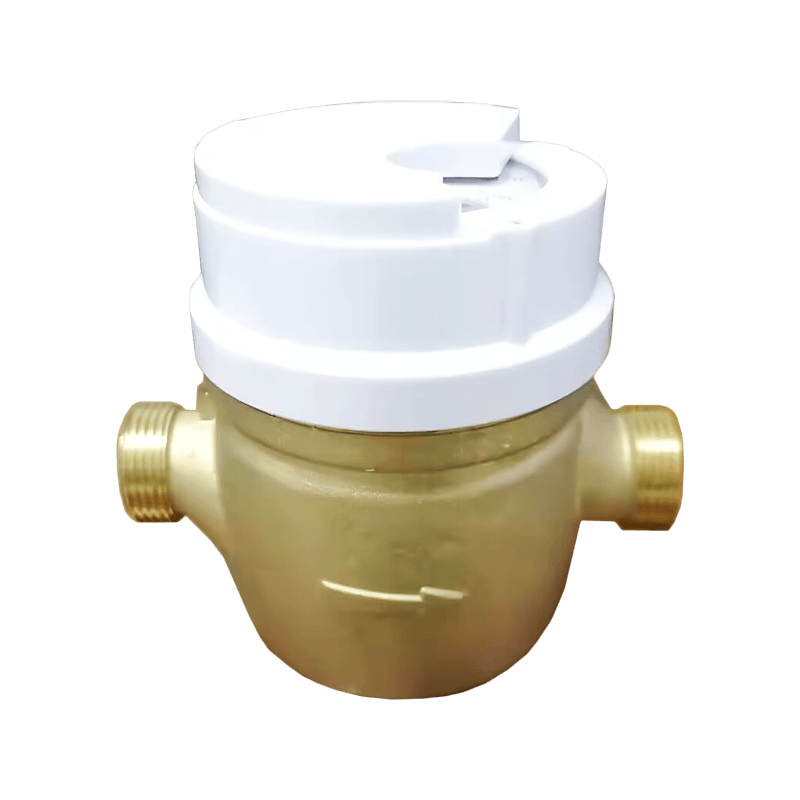
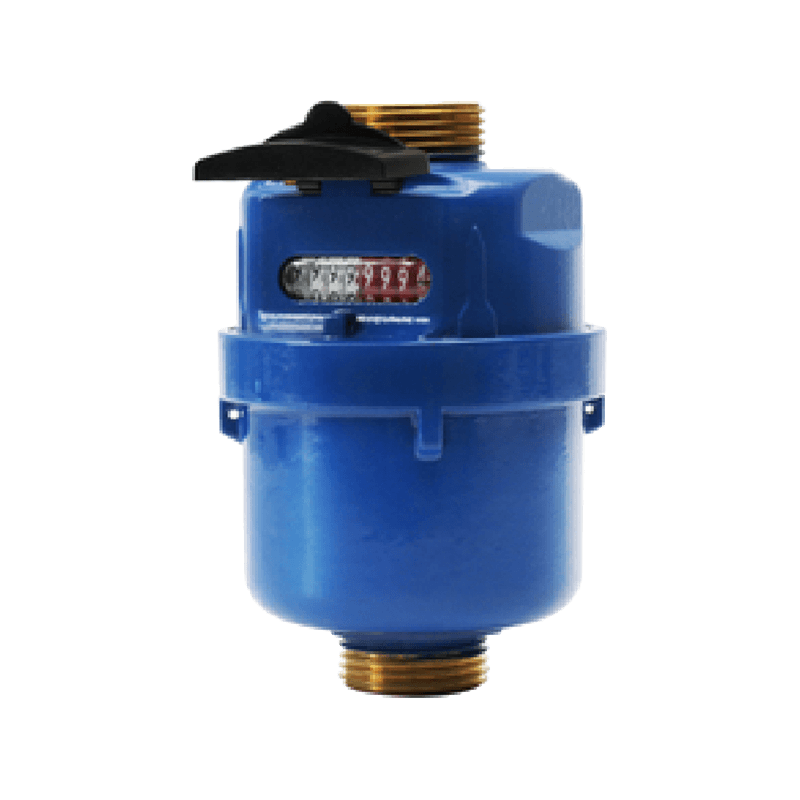
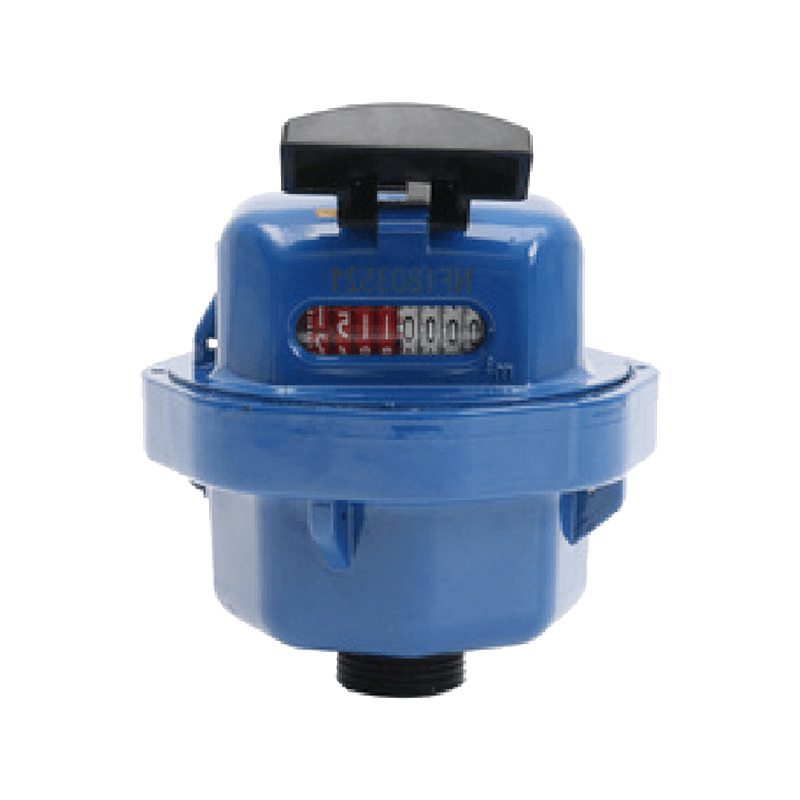
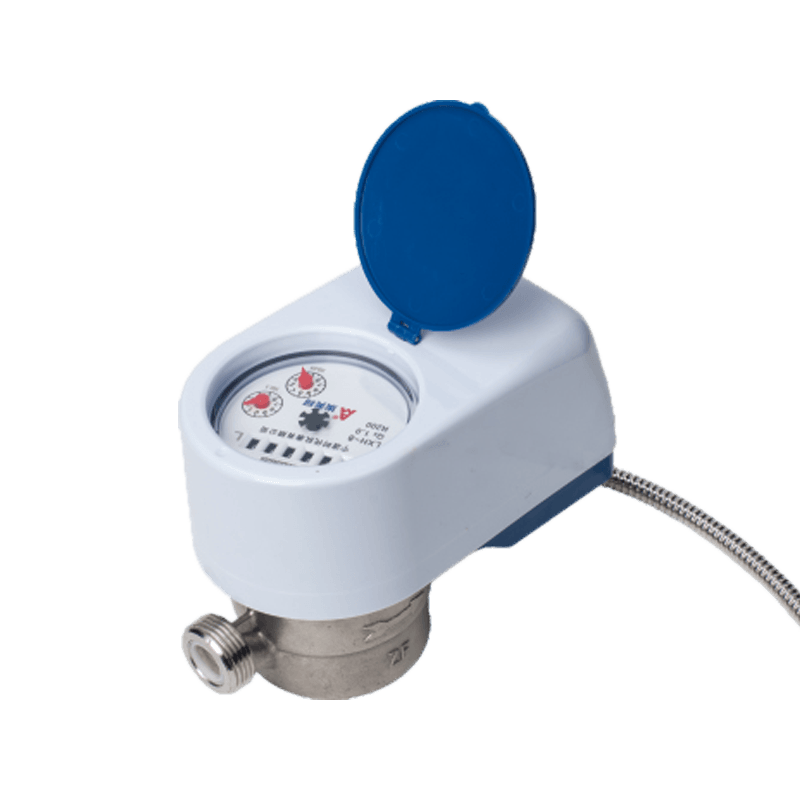
A wireless water meter is a metering device that transmits consumption readings over a radio or cellular network instead of requiring a technician to visit each meter in person. The direct answer for utilities, property managers, and distributors evaluating this technology is straightforward: wireless metering removes the need for manual walk-by or drive-by reading, shortens the billing cycle, and gives operators near real-time visibility into usage patterns and abnormal flow events. This article explains how wireless water meters work, compares the communication technologies behind them, walks through system architecture, and looks at where the technology is being deployed across residential, commercial, and municipal water networks. It draws on publicly available industry research, including market analysis from Grand View Research and non-revenue water studies published by the World Bank, to ground the discussion in verifiable figures rather than general claims. Readers looking for a practical, technical overview of remote water meter reading, NB-IoT water meter systems, and LoRa-based metering will find data tables, comparison charts, and deployment guidance throughout the sections below.
What Is a Wireless Water Meter and How Does It Work
A wireless water meter combines a flow-measuring element, such as a photoelectric direct-reading module or a mechanical register with a pulse output, with a communication module that periodically or continuously reports consumption data. Instead of requiring staff to open a meter pit and record a number by hand, the meter itself pushes data to a central meter reading system through a wireless network. This basic principle underlies several related product categories, including NB-IoT water meters, LoRa water meters, wireless M-Bus meters, and short-range Bluetooth water meters used for walk-by collection. The choice of wireless technology depends on the deployment environment, the density of meters in a service area, and whether the utility wants to rely on an existing cellular network or operate its own private radio infrastructure.
In a typical remote water meter reading setup, the meter wakes on a defined schedule, measures accumulated flow, and transmits a compact data packet containing the reading, a timestamp, and basic diagnostic flags such as battery status or reverse-flow detection. The receiving system, whether a cellular base station for NB-IoT or a LoRa gateway for private-network deployments, forwards that packet to a central platform where it is stored, validated, and made available to billing and analytics software. Because the radio module only powers on briefly to transmit, the meter can remain in an ultra-low power state for the rest of the cycle, which is one of the main reasons wireless metering has become practical for large-scale rollout rather than a niche solution for a handful of hard-to-reach locations.
Core Wireless Communication Technologies Compared
Utilities and meter manufacturers generally choose among a small set of wireless standards when designing a remote reading program, and each one carries different trade-offs in range, power consumption, and network dependency. NB-IoT (Narrowband Internet of Things) rides on existing cellular infrastructure, which means a meter can transmit from almost anywhere with carrier coverage without the utility needing to install its own gateways. LoRa and LoRaWAN, by contrast, use unlicensed sub-GHz spectrum and require the utility or an integrator to deploy gateways, but they avoid ongoing dependence on a third-party mobile network. Wireless M-Bus is widely used in Europe for utility metering and typically covers shorter distances suited to dense urban buildings, while Bluetooth-based meters are most often used for walk-by or drive-by collection where a handheld reader or vehicle passes within a short range of each meter. The table below summarizes the general characteristics of these approaches at a conceptual level; actual performance in any specific deployment depends on terrain, building density, and network configuration.
| Technology | Network Dependency | Typical Use Case | Power Profile |
|---|---|---|---|
| NB-IoT | Public cellular network | Citywide residential rollout | Ultra-low power, scheduled wake |
| LoRa / LoRaWAN | Private gateway network | Campus, industrial park, district metering | Ultra-low power, scheduled wake |
| Wireless M-Bus | Local RF network | Dense multi-unit buildings | Low power |
| Bluetooth | Handheld or vehicle reader | Walk-by / drive-by collection | Low power |
Range is one of the most frequently asked questions when comparing wireless water meter technologies, and it is easier to understand as a visual comparison than as a list of numbers. The chart below shows illustrative, generally cited maximum range bands for each technology under favorable conditions such as open terrain or line-of-sight placement. These figures are approximate and intended to convey relative order of magnitude rather than a guaranteed specification for any single installation. Actual range in the field is influenced by obstacles, building materials, gateway or base station placement, and local radio interference. The bar lengths in the chart are drawn for visual clarity and are not on a strict linear scale, so the labeled values next to each bar should be read as the primary data point.
The chart shows that Bluetooth-based wireless water meters are best suited to short-range collection scenarios, since a handheld reader or vehicle must pass relatively close to each unit for a reliable connection. Wireless M-Bus sits in the middle of the comparison and works well inside dense apartment blocks or mixed-use developments where meters are clustered within a building or a small campus. LoRa extends the practical range considerably in open or semi-open terrain, which is one reason it is often selected for district metering areas, industrial parks, and rural distribution networks where installing extensive fixed infrastructure would be impractical. NB-IoT does not have a single fixed range in the same sense, because it depends on the coverage footprint of the underlying cellular network rather than a dedicated point-to-point radio link, and this is why the chart labels it by cellular cell radius instead of a fixed distance. In practice, this cellular dependency is also NB-IoT's main advantage for citywide rollouts, since a utility does not need to plan or maintain its own network of gateways. The trade-off is that NB-IoT meters rely on continued carrier network availability and, depending on the region, may involve a data connectivity arrangement with a mobile operator. LoRa deployments avoid that ongoing network dependency but require the utility or installer to plan gateway placement carefully, particularly in areas with hills, dense vegetation, or tall buildings that can attenuate the signal. Wireless M-Bus remains a common choice in markets with an established base of compatible receivers and is frequently paired with heat meters and water meters in the same building. Selecting between these options is rarely about which one is universally preferable and is instead a question of matching the technology to the density, terrain, and existing infrastructure of a specific service area. A wireless water meter manufacturer serving multiple regions typically offers more than one communication option so that a distributor or utility can match the product to local network conditions rather than being locked into a single standard.
Battery Life and Power Management in Remote Water Metering
Because most wireless water meters are installed in underground pits, basements, or other locations without easy access to mains power, battery life is one of the most important practical considerations for any deployment. The general engineering principle behind long battery life in this category of device is simple: the radio module should remain in a low-power sleep state for as much of the operating cycle as possible and should only draw significant current during the brief window needed to measure and transmit a reading. A meter that transmits continuously in real time will draw considerably more power over its lifetime than one that reports on a scheduled interval, since radio transmission is typically the most power-intensive operation the device performs. This relationship between reporting frequency and expected battery longevity is well understood across ultra-low-power IoT devices generally, not just water meters, and it directly shapes how manufacturers configure default reporting intervals. Two common configuration modes address different customer needs: a scheduled upload mode that reports at fixed intervals to conserve power, and a real-time upload mode that favors immediacy of data over maximum battery conservation.
The chart below illustrates this general relationship in conceptual terms rather than as an exact specification for any particular battery chemistry or module. It is intended to show the shape of the trend that applies broadly to ultra-low-power wireless meters, including NB-IoT water meter and LoRa water meter product lines that use a sleep-and-wake power management approach. The horizontal axis represents how often the meter is configured to report a reading, moving from continuous or near-real-time reporting on the left to daily reporting on the right. The vertical axis represents relative battery life on an illustrative scale, where higher values indicate a longer expected operating period between battery replacements or the end of a sealed battery's service life. This is a simplified model meant to support planning discussions rather than a guaranteed performance curve for a specific product configuration.
The upward trend in the chart reflects a straightforward operating principle: the less frequently a meter wakes its radio module to transmit, the less cumulative energy it consumes over its service life. Meters configured for continuous or near-real-time upload sit at the lower end of the illustrative curve because the radio module is active far more often, which draws down the battery more quickly even though the benefit is more immediate visibility into consumption. Meters configured for daily or scheduled upload sit at the higher end of the curve because the module spends the vast majority of its time in an ultra-low power sleep state and only wakes briefly to measure and report. This is precisely the behavior described for many modern wireless meter designs, where the device automatically returns to an ultra-low power consumption state once a meter reading cycle is complete rather than remaining active. The two scheduled modes referenced earlier, scheduled upload and real-time upload, essentially let an installer choose a position along this curve based on the priorities of a specific deployment. A residential rollout with thousands of units spread across a city may favor scheduled upload to extend replacement intervals and reduce field service visits. A commercial or industrial site with a smaller number of meters and a stronger need for near-real-time leak or abnormal flow detection may accept a shorter interval in exchange for more current data. Temperature extremes, signal conditions, and the number of retransmission attempts required in a weak-signal area can all shift a real installation up or down from this idealized curve, which is why the chart is presented as a general pattern rather than a fixed guarantee. Manufacturers typically publish configuration options rather than a single fixed reporting rate specifically so that installers can tune this trade-off to the environment. Selecting the right reporting interval is therefore as much a deployment decision as it is a hardware specification, and it should be discussed with the meter reading system provider before a large-scale rollout begins. Utilities planning multi-year deployments generally treat expected replacement or service intervals as a planning input for field maintenance scheduling rather than as a one-time installation detail.
How a Wireless Meter Reading System Is Structured
A complete wireless water meter deployment is more than the meter itself; it is an end-to-end system made up of the meter, the wireless network layer, and a central meter reading platform. The schematic below shows the general data flow used in most remote water meter reading programs, whether the underlying transport is NB-IoT, LoRa, or another wireless standard. The intelligent meter reading system issues a meter reading instruction according to its configured schedule, the remote water meter responds with current consumption data, and that data is stored centrally so that administrators can review usage and meter status without a site visit. This structure is what enables features such as prepayment tracking, remote valve control, and abnormality detection to operate from a single dashboard rather than requiring separate manual processes for each function.
Each stage of this architecture serves a distinct purpose. The meter itself is responsible only for accurate flow measurement and periodic transmission, keeping its power draw and on-board processing minimal. The wireless network layer, whether a carrier's NB-IoT infrastructure or a set of LoRa gateways installed by the utility, carries the reading from the field to a central point without requiring a wired connection back to the meter. The meter reading platform aggregates data from every connected meter, applies validation checks such as flagging unusually high consumption or a sudden drop that could indicate tampering or a burst pipe, and makes the information available through a dashboard. This layered approach is what allows a single administrator to monitor thousands of connection points, which would not be practical under a manual reading model.
Prepayment, Recharge, and Remote Valve Control
Beyond basic consumption reporting, many wireless water meter deployments add prepayment functionality so that customers can recharge their account balance and consumption is tracked against that balance automatically. This model is common in multi-tenant residential buildings, rental properties, and regions where utilities want to reduce the administrative burden of post-paid billing collection. Because the meter reports data through the wireless network, the prepayment balance and usage history can be updated and reviewed without a technician visiting the site, and the customer or property manager can typically view balance and usage information through a linked application or portal.
An optional valve control function extends this further by allowing an authorized administrator to remotely open or close the water supply to a specific connection point. This is typically used for non-payment management, seasonal shutoffs in vacant properties, or emergency isolation in response to a detected leak or abnormal flow pattern. Because the valve command travels over the same wireless channel used for meter reading, no additional site visit or separate control wiring is required, which keeps installation straightforward for both new construction and retrofit projects. As with the core metering function, all valve commands and their outcomes are logged in the meter reading system, giving administrators a record of when and why a given valve was operated.
- Prepayment balances update automatically as consumption data is received from the wireless meter.
- Recharge transactions can be reflected in the system without requiring a physical visit to the meter.
- Remote valve control allows supply to be paused or restored from the central platform.
- All balance changes and valve actions are stored for administrative review and auditing.
Where Wireless Water Meters Are Deployed
Wireless water metering is used across a broad range of settings, from single-family residential connections to large industrial and municipal bulk metering points, and the right technology mix often differs by segment. Residential deployments tend to prioritize low per-unit cost of ownership, long battery life, and straightforward integration with prepayment or billing systems, since these programs frequently involve installing large numbers of meters across a wide geographic area. Commercial buildings often favor sub-metering multiple tenants from a shared supply line, which benefits from the same wireless infrastructure but with a greater emphasis on granular reporting per unit. Industrial sites tend to have fewer connection points but place more weight on data reliability and integration with existing process monitoring systems. Municipal and district metering, meanwhile, is often used at a higher level in the network to track bulk flow into a zone and detect large-scale losses before they reach individual customer meters.
The donut chart below presents an illustrative, representative distribution of these application segments based on common deployment patterns observed across the wireless water meter industry rather than data attributed to a single named source. It is meant to give a general sense of relative emphasis rather than a precise market share figure, since actual proportions vary considerably by country, regulatory environment, and the maturity of a given utility's smart metering program. Residential connections typically represent the largest single segment by unit count because there are simply more household connections than industrial or bulk metering points in most service areas. Commercial and industrial segments follow, reflecting a mix of sub-metering and process monitoring use cases. Municipal and district bulk metering rounds out the picture as a smaller but strategically important segment focused on network-level loss detection rather than individual billing.
The dominance of the residential segment in this illustrative breakdown reflects the sheer scale of household connections that utilities must manage, and it is also the segment where reducing manual meter reading labor produces the largest cumulative time savings. Commercial deployments benefit from wireless sub-metering because a single building can be divided into many billable units without running separate wired connections back to a central reading point for each tenant. Industrial users, while smaller in count, often generate a disproportionate share of total water consumption per connection, so accurate and timely data from these meters carries significant operational weight even though the segment's share of total connections is comparatively modest. Municipal and district-level bulk metering plays a different role entirely: rather than billing individual customers, it is primarily used to compare water entering a zone against the sum of metered consumption within that zone, which is one of the standard techniques for identifying non-revenue water losses. A shift toward wireless technology in any of these segments generally follows the same underlying driver, which is the desire for more frequent, lower-labor data collection than a manual reading cycle can provide. Property developers increasingly specify wireless-ready metering at the construction stage rather than retrofitting later, since it is more efficient to install the wiring-free infrastructure once rather than upgrading a building's metering system after occupancy. Utilities running pilot programs frequently begin in a single segment, most often residential or a defined district metering area, before expanding to other segments once the reading system and back-end integration have been validated. This segment-by-segment approach also allows a wireless water meter manufacturer to tailor product configuration, such as reporting interval or valve control availability, to the specific needs of each customer type rather than offering a single undifferentiated product. Taken together, these deployment patterns explain why demand for wireless metering technology continues to expand across nearly every category of water connection rather than being concentrated in one narrow use case.
Comparing Performance Across Metering Approaches
Choosing between NB-IoT wireless metering, LoRa-based wireless metering, and traditional manual or wired reading involves weighing several performance dimensions at once rather than optimizing for a single factor. Read range, ease of installation, dependence on external networks, how frequently data can realistically be updated, and how well the approach scales as a network grows all matter differently depending on the deployment context. A radar chart is a useful way to visualize these trade-offs together because it shows the overall shape of each approach's strengths and weaknesses rather than reducing the comparison to one number. The chart below uses a simple one-to-five relative scale across five dimensions for three approaches: NB-IoT wireless metering, LoRa wireless metering, and traditional manual or wired meter reading, which is included as a baseline for comparison rather than as a specific competing product. The scoring reflects general, widely recognized engineering characteristics of each approach rather than data from a specific vendor benchmark.
The shape of the NB-IoT polygon on this chart extends furthest along installation simplicity and long-term scalability, which reflects the fact that a meter can typically be activated on an existing cellular network without the utility building any dedicated radio infrastructure of its own. This same reliance on a public network is why NB-IoT scores lower on network independence, since ongoing operation depends on continued cellular coverage and connectivity arrangements with a network operator. LoRa shows a different shape, extending furthest on network independence because the utility operates its own gateway infrastructure rather than depending on a third-party carrier, which can be an important consideration for organizations that prefer to control their own network layer. LoRa scores moderately on installation simplicity because gateways must be planned and installed, a step that NB-IoT largely avoids by using existing cellular towers. Both wireless approaches score well above manual or wired reading on data update frequency, since even a conservative scheduled upload interval of several times per day still delivers far more current information than a monthly or quarterly manual visit. Manual and wired reading scores lowest on long-term scalability in this comparison because adding connection points generally means adding proportional field labor or additional wiring runs, whereas a wireless network can typically absorb additional meters with comparatively modest incremental infrastructure. Read range is scored moderately for LoRa and highly for NB-IoT for the same underlying reason discussed in the earlier range comparison, namely that NB-IoT benefits from the wide coverage footprint already built out by cellular operators. It is worth noting that manual and wired reading is included here as a reference baseline representing traditional methods, not as a named competing product, since the purpose of the comparison is to illustrate why utilities are shifting toward wireless technology generally. No single approach scores highest across all five dimensions, which is exactly the point of presenting the comparison as a radar chart rather than a ranked list, because the right choice depends on which dimensions matter most for a specific project. A utility with existing cellular coverage across its entire service territory may lean toward NB-IoT for its lower infrastructure burden, while an organization managing a defined campus or industrial site with a preference for network control may lean toward LoRa. Both remain fundamentally different from, and generally more capable across most dimensions than, manual or wired reading approaches for large-scale metering programs.
Reducing Non-Revenue Water Through Remote Monitoring
Non-revenue water, commonly abbreviated NRW, refers to water that is produced and enters a distribution system but is never billed, whether due to physical leakage, metering inaccuracy, or unauthorized consumption. According to World Bank research on the topic, developing countries lose roughly 45 million cubic meters of water every day, with an estimated economic value exceeding three billion US dollars per year, and the World Bank has separately estimated global physical water losses at around 32 billion cubic meters annually, about half of which occurs in developing countries. The same research notes that the World Bank recommends non-revenue water stay below roughly 25 percent of total water produced, while in practice the figure can reach as high as 60 percent in many countries. These figures illustrate why utilities treat non-revenue water reduction as a significant operational priority rather than a minor line item, and why accurate, frequently updated metering data plays a central role in identifying where losses are occurring.
Wireless water meters contribute to non-revenue water reduction in a few specific ways. Frequent automated readings make it easier to spot a sudden change in consumption at an individual connection, which can indicate an undetected leak on the customer side of the meter well before it would be noticed through a monthly manual reading. District metering areas equipped with wireless bulk meters allow utilities to compare water entering a zone against the sum of billed consumption within that zone, narrowing down where losses are concentrated without having to inspect the entire network at once. Remote diagnostics, including reverse-flow detection and meter status flags, also help identify metering inaccuracy or tampering that would otherwise reduce billed revenue without being classified as a physical leak. Industry analysis from Grand View Research values the global smart water meters market at approximately 9.1 billion US dollars in 2024, projecting growth to roughly 10.9 billion US dollars in 2026 and 16.2 billion US dollars by 2030, a trend that reflects the broader shift of utilities worldwide toward metering infrastructure capable of supporting this kind of loss detection at scale.
Practical Considerations for Manufacturers, Wholesalers, and Utilities
Organizations sourcing wireless water meters at scale, whether as a utility running a metering program, a distributor supplying installers, or a wholesale buyer serving a regional market, generally evaluate suppliers against a similar set of practical criteria. Compatibility with the intended communication standard is the starting point, since a meter built for NB-IoT will not integrate with a LoRa gateway network and vice versa. Consistency of the meter reading system's software interface matters as much as the hardware itself, since the platform is what turns raw transmitted data into usable billing and diagnostic information. The following list summarizes points that commonly come up during supplier evaluation for wireless water meter wholesale and distribution partnerships.
- Confirm which wireless standards are supported, including NB-IoT, LoRa, wireless M-Bus, or Bluetooth, and match this to the target market's network conditions.
- Review available reporting interval configurations to balance data freshness against expected service life between battery replacements.
- Check whether prepayment and remote valve control functions are available as optional features for the intended application.
- Evaluate the meter reading platform's ability to scale from a pilot deployment to a full citywide or regional rollout.
- Assess environmental durability specifications, since many meters are installed in underground pits exposed to moisture and temperature variation.
- Verify diagnostic and abnormality detection capabilities, including reverse-flow and low-battery alerts, that support non-revenue water reduction goals.
For distributors and wholesale buyers, working with an established wireless water meter manufacturer that offers a consistent product line across communication standards can simplify inventory planning, since a single supplier relationship can cover multiple regional network requirements rather than requiring separate sourcing arrangements for each wireless standard.
Installation and Maintenance Guidance
One of the practical advantages of wireless water meters is that installation does not require running communication cabling back to a central point, which simplifies both new construction and retrofit projects. A typical installation sequence still benefits from a consistent process to ensure reliable network connectivity once the meter is in service.
- Confirm signal availability at the installation site before finalizing meter placement, particularly for LoRa deployments where gateway distance matters.
- Mount the meter according to manufacturer orientation guidance to maintain measurement accuracy.
- Register the meter's unique identifier in the meter reading system before activating the connection.
- Verify that an initial reading is received successfully before closing out the installation.
- Schedule periodic remote diagnostic checks rather than routine physical inspections, reserving site visits for flagged anomalies.
About NINGBO SHIDAI INSTRUMENT CO., LTD
NINGBO SHIDAI INSTRUMENT CO., LTD is a subsidiary of AMICO Group and operates as a comprehensive high-tech enterprise focused on the research, development, production, and sales service of metering products under the AMICO brand. The company's product range includes IC card water meters, Bluetooth water meters, heat meters, photoelectric direct-reading meters, pulse remote transmission meters, LoRa wireless meters, NB wireless meters, WS water meters, WPD water meters, single-flow communication water meters, capacitive direct-drinking water meters, and intelligent water meter reading systems. This breadth of product coverage allows the company to support customers across residential, commercial, industrial, and municipal metering needs within a single supplier relationship. As a manufacturer with in-house research and development capability, NINGBO SHIDAI INSTRUMENT CO., LTD is positioned to support wireless water meter wholesale and distribution partners seeking consistent product quality and integrated meter reading system compatibility across a growing wireless metering portfolio.
Frequently Asked Questions
Q1: What is a wireless water meter?
A wireless water meter is a metering device that transmits consumption readings over a radio or cellular network, allowing data to reach a central meter reading system without a technician visiting each location in person.
Q2: What is the difference between NB-IoT and LoRa water meters?
NB-IoT water meters use existing public cellular networks, so no dedicated gateway infrastructure is required, while LoRa water meters use a private gateway network that the utility or installer sets up and controls independently of a mobile carrier.
Q3: How does a wireless water meter help with non-revenue water reduction?
Frequent automated readings and remote diagnostic flags make it easier to detect leaks, abnormal flow, and metering inaccuracies early, supporting the kind of loss-tracking that non-revenue water reduction programs rely on.
Q4: Does a wireless water meter require wiring during installation?
No, wireless water meters are designed specifically to avoid the need for communication wiring between the meter and the reading system, which simplifies both new installations and retrofits.
Q5: Can a wireless water meter support prepayment and remote valve control?
Many wireless water meter systems support optional prepayment tracking and remote valve control, allowing balances to update automatically and supply to be managed from the central platform when needed.